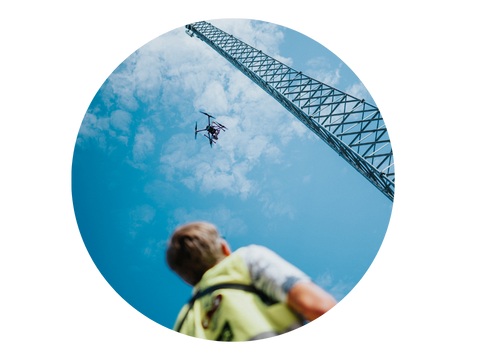
The project of ECO of Latvia focuses on using artificial intelligence and machine learning algorithms to help engineers in their daily mission – to ensure, that the whole world is connected, and this connection is not interrupted.
While radio communications are developing rapidly, we need to be able to keep up and invent new ways to work smarter. The greatest benefit of the project is that we will be able now to perform accurate real-time measurements at extremely high frequencies (EHF), where due to the specific nature of the distribution of radio signals, the reception of radio signals from the ground is not effective.
Research No 2.10 “Measurement of Radio Spectrum Parameters Using Unmanned Aerial Vehicles” is conducted as the part of the project No 1.2.1.1/18/A/006 “’Latvian Competence Centre for the Production of Electrical and Optical Equipment.”
Project Title:
EU project “5G Corridor Study for Latvia, Estonia and Lithuania (21-EU-DIG-LATEST_5GS), ID No. 101094532
About the project:
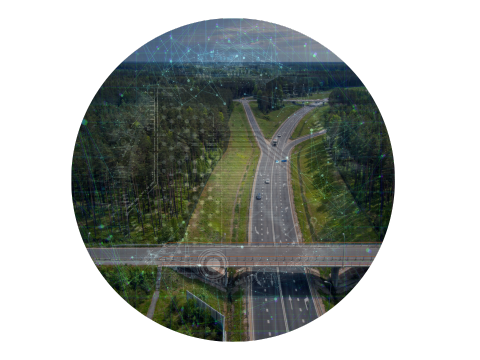
The aim of the project is to carry out a study that includes a technical solution and financial model for the necessary 5G deployment infrastructure along the Via Baltica and Rail Baltica transport corridors, as well as in the Valka-Valga section in Estonia and Latvia, with the ability to provide 5G coverage and technical solutions for the transition without communication loss of quality to the neighboring country's communication network also at the cross-border sections.
The project is implemented within the framework of the call of the Connecting Europe Facility Instrument program. It is expected that the study will identify requirements for 5G networks to provide service along the mentioned transport corridors, as well as analyze coordination mechanisms to ensure the continuity of spectrum management operations across borders.
Project partners
Five partners (beneficiaries) are involved in the project, developing a study on the deployment of 5G along the mentioned transport corridors in the territories of Estonia and Latvia, as well as at border points (Estonia – Latvia and Latvia – Lithuania).
- SJSC Electronic Communications Office of Latvia (VAS ES)
- Tallinn Technical University (project coordinator)
- TELIA (Telecommunications operator of Estonia)
- Elisa (Telecommunications operator of Estonia)
- ELASA (Estonian Broadband Development Foundation)
Two associated partners also take part in the project - the Ministry of Transport of the Republic of Lithuania and Latvijas Mobilais Telefons (LMT). In 2021, the Ministry of Transport and Communications of the Republic of Lithuania, considering the national strategic goals, carried out a research project with the aim of ensuring the fastest possible implementation of next-generation mobile 5G technologies and the development of existing electronic communications in Lithuania. The Lithuanian representatives share the experience gained on the national scale also within the framework of this project.
Results and impact
As a result of the project, a research report will be created, which will contain an analysis of the needs and challenges of the involved parties in the deployment of 5G coverage, the possibilities of communication provision at cross-border points, network mapping and its cost calculations. The research can be used by project applicants who plan to participate in the 2nd round of calls (works) section of the European Infrastructure Connecting Instrument program, applying for EU co-financing for the deployment of 5G infrastructure. Taking into account that the applicants for the specific funding must form consortia from at least two different neighboring countries, the result of this study and the cooperation of the existing consortium will help to promote the cooperation of the Baltic countries for the formation of a joint consortium.
Within the project, an open-access article has been written and published “Cost-Efficient Network Planning for the Cross-Border Baltic Corridor—A Study” - https://www.mdpi.com/1424-8220/23/19/8111 (Reference: Elgarhy, O.; Alam, M.M.; Tammets, A.; Roosipuu, P.; Ancāns, G.; Saidāns, G.; Tutovs, J.; Saliņš, K.; Vērdiņš, A.; Aleksandrovs, M.; et al. Cost-Efficient Network Planning for the Cross-Border Baltic Corridor—A Study. Sensors 2023, 23, 8111. https://doi.org/10.3390/s23198111 ).
The project and it’s results are overviewed in the 5G Techritory (2023) blog article “EU CO-FUNDS AN INCEPTION STUDY ON 5G COVERAGE PLANNING ALONGSIDE TRANSPORT CORRIDORS IN THE BALTICS – EXPLORE THE HIGHLIGHTS“.
Project timeframe
Project activities are planned for 6 months, from January 1, 2023, to June 30, 2023.
Information about the project is also available - https://digital-strategy.ec.europa.eu/en/news/5g-coverage-along-transport-corridors-first-wave-projects-selected-co-funding-5g-corridor

Co-financed by the European Union project 21-EU-DIG-LATEST_5GS, ID No. 101094532 .
The European Union is not responsible for the content of the website.
Project Title
Connecting Pockets of MetaCity Excellence around the Baltic Sea Region (Metacities).
Metacities, ID No. 101134225
Description
The main objective of METACITIES is to speed up, consolidate, align and leverage the existing MetaCity and Smart City initiatives of the partner regions, and through this, build the world’s leading connected MetaCity Region across the Baltic Sea (BSR).
MetaCity is a novel smart city and urban innovation concept, focusing on open innovation which is supported and encouraged by digital environments and social networks. MetaCity is responding to, and leveraging on the post-pandemic transition to virtual co-operation and virtual urban services. MetaCity is an emerging regional policy objective, already in regional policy planning in Oulu Region and Latvia. MetaCity aims to expand ICT-oriented Smart City development to a wider base of regional innovation capabilities and innovation capture, including for example service innovations and social innovations.
The METACITIES project connects a balanced mix of MetaCity and Smart City ecosystems: definite global thematic leaders, thematic followers, urban capital areas, mid-size central towns, and more rural regions. It will strengthen ecosystem collaboration between the MetaCity Regions in the Baltic Sea area and prepare the collaboration opportunity space. It will create a joint action plan for Baltic Sea MetaCity Regions and decide the action plan details in interaction with regional funding decision-making
METACITIES aims to position the EU BSR area as the World’s leading “Connected Regional Innovation Valley” for MetaCity innovations
Project Partners
- EIT DIGITAL Belgium (Coordinator)
- City of Oulu, Finland
- Electronic Communications Office of Latvia
- Luleå University of Technology Sweden
- EdTech Hub Ventures Poland
- University of Oulu Finland
Project Timeframe
01.11.2023. – 31.11.2024. (13 months)
Funding
The project “Connecting Pockets of MetaCity Excellence around the Baltic Sea Region (Metacities)” is 100% funded by European Commission (Horizon Europe, European Innovation Ecosystem), under call HORIZON-EIE-2023-CONNECT-01.
The total cost of the project is EUR 499,990.63

Project name:
Smart Networks and Services International and European Cooperation Ecosystem (SNS ICE)
Project duration:
27 months (01.01.2023 - 31.03.2025.)
Project Abstract:
The project will create a collaborative environment for European and global stakeholders involved in the preparation of 6G smart networks and services. It will be the instrument to present, leverage, and position the SNS JU activities and achievements in major European and global fora. The project will work at a global level with other regions, where 6G activities are planned and ongoing. This will create an environment to promote SNS JU results and achievements, and exchange trends and ideas to achieve global consensus. Key standardization activities will be also monitored, and main roadmaps and trends will be communicated back to the SNS JU projects.
The project will also establish dialogues at a European level between peer Horizon Europe Partnerships, national initiatives, research and development clusters, etc., targeting the exchange of information, plans and priorities. This will enable a better understanding of the European activities among the involved stakeholders and will potentially enable a better alignment of their plans.
Additionally, SNS ICE will also be engaged in dialogues with key vertical industries through well-established associations, to identify their requirements and promote the SNS JU solutions to them. This exchange of ideas will create opportunities for tailor-cut 6G solutions and their early adoption by the vertical industries.
All these activities are expected to contribute significantly to securing Europe’s leading role in the definition, provision, and exploitation of 6G solutions.
SNS ICE is planning to organize dedicated workshops with the abovementioned groups of stakeholders at main international events, most notably Techritory and EuCNC. It will also provide several presentations at international and European conferences and events. The outcomes of these results will be communicated to the SNS JU community assisting the research and innovation activities to be fully aware of the global 6G progress.
Main objectives:
- Establish relationships & create a framework for dialogues & cooperation
- Promote SNS activities and achievements & identify potential target areas
- Target consensus building & plan for future steps
Project partners:
- 6G SMART NETWORKS AND SERVICES INDUSTRY ASSOCIATION, BE
- CENTRE TECNOLOGIC DE TELECOMUNICACIONS DE CATALUNYA, ES
- NEDERLANDSE ORGANISATIE VOOR TOEGEPAST NATUURWETENSCHAPPELIJK ONDERZOEK TNO, NL
- TRUST-IT SRL, IT
- COMMPLA SRL, IT
- TELECOM ITALIA SPA, IT
- NOKIA SOLUTIONS AND NETWORKS GMBH &CO KG, DE
- EURESCOM-EUROPEAN INSTITUTE FOR RESEARCH AND STRATEGIC STUDIES IN TELECOMMUNICATIONS GMBH, DE
- ELECTRONIC COMMUNICATIONS OFFICE OF LATVIA, LV
Funding
The project “Smart Networks and Services International and European Cooperation Ecosystem (SNS ICE)” is funded by European Commission (Horizon Europe Framework Programme), under call HORIZON-JU-SNS-2022.
The European Union is not responsible for the content of this page.

Project title
Deploying advanced national QCI systems and networks
LATQN, ID No. 101091559
Description
On 11 February 2021, Latvia signed the EuroQCI declaration joining other European countries to build a quantum communication infrastructure spanning the EU and its overseas territories (EuroQCI). As of now, all 27 EU Member States have committed to working together alongside the European Commission and the European Space Agency (ESA) to build the EuroQCI with the aim of increasing the scientific and technological capacity of the EU, the competitiveness of quantum technologies and production. The Declaration sets out the objectives of building cooperation between EU Member States to explore how to create an integrated quantum secure communication infrastructure that enhances the scientific and technological capabilities of the EU, the competitiveness of quantum technologies and industry, and, with the increasing risk of cyber threats in the coming decade, is safe from a cybersecurity point of view and promotes the strategic autonomy of the EU.
The activities carried out in the project will contribute to the overall objectives of the Digital Europe Programme, as the Quantum Communication network will be used to ensure safe use of services for the needs of public authorities, private companies, and individuals. The project concerns cybersecurity, one of the areas covered by the Digital Europe Programme.
The project is directly linked to objective 3 “Cybersecurity and reliability” of the Digital Europe Programme, as it will involve investments in advanced cybersecurity equipment, infrastructure, and science, which are essential to protect the infrastructure of electronic communications networks and the Digital Single market. The project will cover part of Digital Europe objective 4 “Advanced Digital skills”, as the project will provide user training in the use of quantum technologies in cybersecurity. The objective and expected results of the project will directly address the priority of the Digital Europe Programme – modernisation of European public administration, as the results of the project can be used to provide public services based on new technologies and knowledge.
As a result of the Project, a national level experimental QKD network will be developed, including integration in the existing communications networks of the Project partners. The experimental QKD network will consist of an infrastructure QKD backbone (public and closed parts), where quantum encryption solutions will be integrated. A trusted node software solution for managing data exchange within public and closed networks will be implemented.
Find out more about the project: https://www.lvrtc.lv/en/quantum/news/
Project partners
Four beneficiaries (partners) are involved in the implementation of the project:
- Leading partner and coordinator – SJSC “Latvia State Radio and Television Center” (LVRTC)
- State sector partner – The Electronic Communications Office of Latvia
- Private sector partner – LLC “Tet”
- Research and scientific partner – Institute of Mathematics and Computer Science, University of Latvia (ICMS UL)
Activities
- Deployment of national infrastructure QKD backbone
- Integration of QKD into communication networks and development of government data processing applications
- Testbed for Secure QKD backbone gateway for wireless networks, including 5G (use case)
- Secure data transmission for healthcare sector data (use case)
- Secure data transmission for finance sector data (use case)
- Long-distance QKD solutions research activities (use case)
- Dissemination, training and publicity activities for various user groups
Project timeframe
The total implementation period of the project is 36 months, starting from 01.01.2023 and ending on 31.12.2025. The Electronic Communications Office of Latvia is scheduled to participate actively until 30.06.2025.
Funding
The implementation activities of the Project “Development of experimental quantum communication infrastructure in Latvia” by “Electronic Communications Office of Latvia” is co-funded by the European Union under Grant Agreement No. 101091559 and by the Ministry of Smart Administration and Regional Development (Cooperation Agreement No. IKT/57/2023).
Total budget is 8 061 380.00 EUR, of which co-funded by the European Union: 4 030 690.00 EUR (50% of the total eligible costs of the project).
The European Union is not responsible for the content of this page.
Communication Materials









Project title:
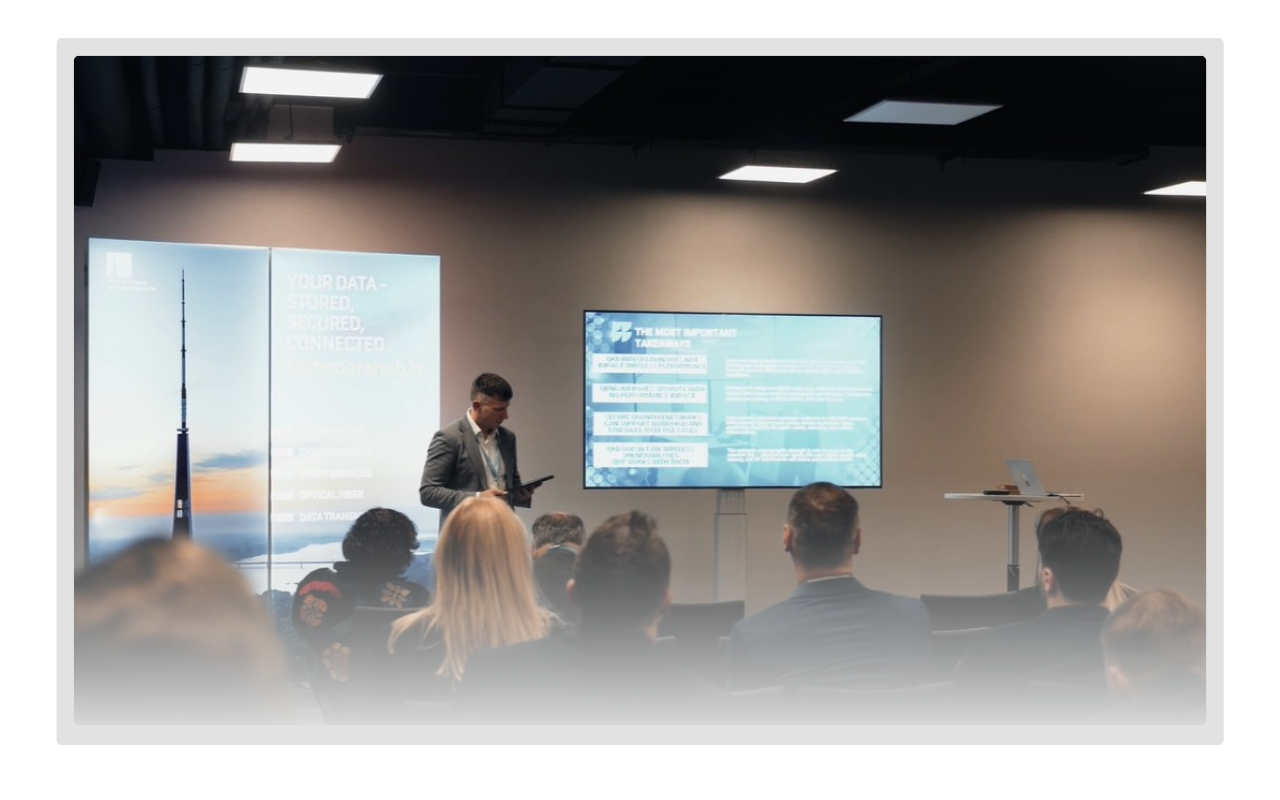
Family and Children's Career Day of the Electronic Communications Office of Latvia.
Projekta numurs: 2025.LV/ĢDD/025
Project goal:
- To organize an educational event for the children of company’s employees, to introduce them in an understandable, child-appropriate, and practical way to their parents' work environment and the company's field of activity – radio frequency spectrum management, which is almost invisible to the public in everyday life but essential for anyone who uses wireless communications, e.g., mobile phones, the internet, television, walkie-talkies, etc.
- To promote various family-friendly educational activities, introducing employees' children to their parents' occupations and careers, so that both the children and the families benefit from learning and resting together.
- To introduce children to the world of radio frequencies and various types of radio communication, thereby increasing their interest in the STEM field and gaining an understanding of the basic operating principles of radio communication systems.
During the Career Day, numerous parents will act as guides or participants in the activities, strengthening family involvement and intergenerational connection, and promoting the development of a family-friendly work culture in Latvia.
Project implementation period:
August 1, 2025 - to October 1, 2025.
Financing and grant program goal:
The project co-financing costs are EUR 4,000.00, which are financed by the European Union and the event is organized within the framework of the European Social Fund Plus project “Creating a family-friendly environment and society”, project number 4.3.6.9/1/24/I/001”.
The goal of the grant program is to create a supportive society for families with children by implementing measures and support programs to promote psychological and emotional resilience, creating prerequisites for the positive development and social integration of children, allowing them to realize their potential for a successful life.
Project name:
European Union project “Digital accelerator of Latvia (DAoL)”, ID Nr. 101083718 and the European Union Recovery and Resilience Facility plan ID Nr. 2.2.1.1.i.0/1/23/I/CFLA/002.
Project summary:
The objectives of Digital Accelerator of Latvia (DAoL) are to promote digital transformation and innovation, to improve the competitiveness of Latvian companies and the quality of public services through new digital solutions, to boost investments in research and development of ICT technology.
Project goals and activities:
The objectives for the first 3 years:
- to develop fully operational EDIH, to support at least 1236 companies and organizations,
- to invest 3.5 mil. EUR in digital transformation (DEP & RRF),
- to trigger at least 2.4 mil. EUR from other financial sources.
Specialization of DAoL:
- AI with specialisation in R&D of new digital products and digital services.
- 5G incl. application in IoT, Internet of Energy, Connectivity technologies, Autonomous and controlled vehicles, robots.
- GovTech incl. Government as a platform, Cybersecurity, Quantum technologies and EdTech.
DAoL is designed as a one-stop agency to help entities become more competitive regarding their digitalisation processes, products, or services.
Project target group:
The target group of the project is micro, small, medium and large merchants, associations and foundations that unite several merchants, public persons or their institutions, capital companies of public persons, research and knowledge dissemination organizations registered in the territory of the Republic of Latvia, and which can develop and implement new digital transformation products.
Main activities:
Preparation of digital maturity tests, roadmaps and opinions for the final beneficiaries; support for experimentation, piloting and testing activities; consulting and mentoring; training and ICT skills development; fundraising consulting; networking and access to the innovation ecosystem
Project partners:
Project involves 20 partners that provide access to extensive research and technological experience as well as support for entrepreneurship and innovation. Consortium includes 4 partners with DIH experience, 3 leading and 3 regional universities from Latvia, innovative NGOs with long-term experience in providing support in high technologies, green technologies, regional and technological development. DAoL will provide access to the latest digital skills and will support product innovation.
- “Electronic Communications Office of Latvia";
- Ventspils High Technology Park;
- Green Tech Cluster Latvia;
- Valmiera Development Agency;
- DAoL Rēzekne subsidary;
- Rēzekne City Council;
- University of Latvia;
- RTU Liepaja Academy;
- Latvia University of Life Sciences and Technologies;
- Riga Technical University;
- Vidzeme University of Applied Sciences;
- Institute of Solid State Physics University of Latvia;
- Rezekne Academy of Technologies;
- Institute of Mathematics and Computer Science of the University of Latvia;
- Institute of Electronics and Computer Science;
- Ltd “Baltic Open Solutions Center”;
- Ltd “DATI Group”;
- TechHub Riga;
- Ltd“Helve”;
- Ltd “LEITC” jeb Latvian Electronic Equipment Testing Centre
Results and impact
During the project it is planned to test digital maturity and prepare digital transformation roadmaps of at least 1236 entities, ensure access to testing, prototyping, and experimenting for at least 128 entities, involve in trainings at least 360 entities, attract financing to at least 46 entities, and have at least 40 collaborations.
The planned results of the Recovery Fund project envisage providing support in the field of digital transformation to 3,500 final beneficiaries.
Project timeframe
Project activities are planned for 3 years from 1st September 2022 – 31st August 2025.
The duration of the European Union Recovery and Resilience Facility project is 46 months from September 2022 to June 2026.
Project budget
The total cost of the project is EUR 6,765,999.64, of which EUR 1,765,999.64 is covered by the European Commission within the "Digital Europe" program and EUR 5 million EUR by Recovery fund.

Co-financed by the European Union project "Digital Accelerator of Latvia", DAoL, ID no. 101083718 and the European Union Recovery and Resilience Facility plan ID Nr. 2.2.1.1.i.0/1/23/I/CFLA/002.
The European Union is not responsible for the content of this page.

Project title:
Project "INACT" – Co-financing by the Association LETERA for the internationalization activities of LLC Electronic Communications Office of Latvia
Description:
LLC Electronic Communications Office of Latvia participates in the Rehabilitation Fund project no. 5.1.1.2.i.0/3/24/A/CFLA/005 "Latvian Electrical Engineering and Electronics Industry Cluster".
The aim of the project:
To support the internationalization of Latvian electrical engineering and electronics industry cluster members and to increase private investments in research and development.
Project Timeframe:
Project implementation period: February 2025 – June 2026
Funding:
Total budget is 35 294 EUR, of which 30 000,00 EUR co-funded by LETERA.
More about the project at https://www.letera.lv/projekts/latvijas-elektrotehnikas-un-elektronikas-nozares-klasteris/.